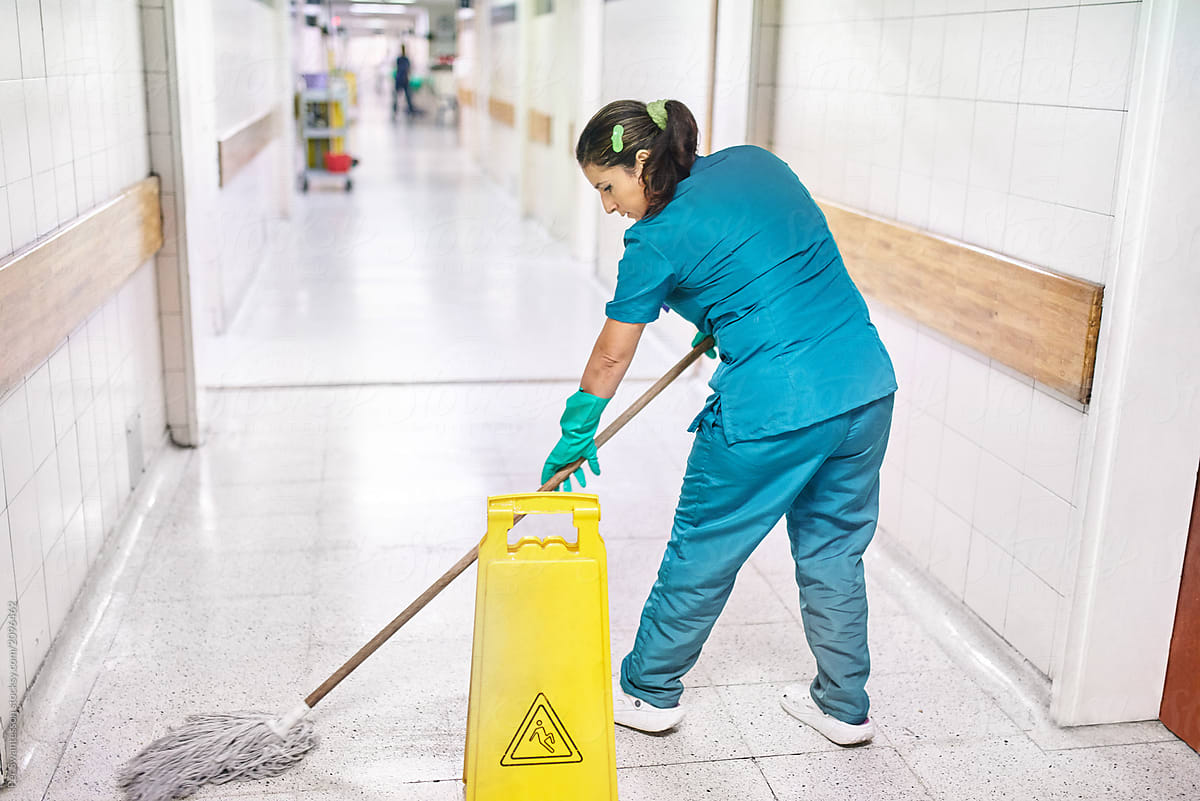
Whatever it’s the field of activity, a company must maintain clean workrooms. Dust and manufacturing residues can disrupt the production line, deteriorate products and cause accidents. However, industrial cleaning is very technical maintenance, which follows many rigorous protocols, to be reserved for authorized persons.
For the best industrial cleaning services in Des Moines WA., contact Premier Janitorial. They have a highly skilled cleaning staff.
WHAT IS INDUSTRIAL CLEANING?
Industrial cleaning is cleaning specific to industrial sites such as:
- factories ;
- storage and logistics warehouses;
- electric or nuclear power plants;
- food or pharmaceutical industries;
- shops;
- construction sites …
The definition of industrial cleaning is, therefore, broad. The term covers a variety of professional fields, which have fundamentally different household needs. In addition to cleaning the premises themselves (floor, furniture, walls, etc.), maintenance agents must also take care of the machines to rid them of dust, grease, or dirt that can prevent them from functioning.
CLEANING OF AN INDUSTRIAL SITE: LEGAL ASPECTS
Industrial sites are subject to the regulations concerning professional premises
- Food
All the rules are united under the term Codex Alimentarius to reduce the risk of food contamination.
- Pharmaceuticals
The manufacture of drugs and cosmetics must follow the Good Manufacturing Practices (GMP) defined by the WHO to prevent any risk of biological, chemical, or particulate contamination of the products.
- High-tech industries Cleanroom
production is subject to compliance with ISO 14644-1 and 14644-2 standards, controlling the number of particles in the ambient air.
- THE INDUSTRIAL CLEANING MARKET IN FRANCE
After a decline between 2013 and 2016, the industrial cleaning market grew by 37%, stronger than regular cleaning. It represents a market of more than 2 billion euros in France.
This is explained by a strengthening of quality standards related to cleaning, encouraging professional customers to call on specialized cleaning companies to maintain their premises. Industrial cleaning is intended exclusively for companies: these are BtoB (business to business) services, for which service providers may find it difficult to distinguish themselves from other cleaning companies. Consequently, it is in the ancillary services (waste management, maintenance of green spaces, etc.) that industrial cleaning companies can set themselves apart from their competitors.
THE DIFFERENT CASES OF INDUSTRIAL CLEANING
The nature of the maintenance to be carried out depends entirely on the company’s activity, whether or not it receives the public.
Industrial cleaning in a production site
In production sites, the purpose of cleaning is to preserve the health of employees, ensure product compliance and prevent accidents.
It is a question of preventing falls or slips, as well as contamination by dangerous substances.
The surfaces to be cleaned are of various kinds:
- floors: elimination of dust, residues, grease or oil stains, etc.
- walls and ceilings: dust and stain removal;
- furniture: dusting and degreasing storage shelves, workbenches, tables, etc.
- machines: dedusting and degreasing;
- contact surfaces: disinfection of door handles, switches, elevator buttons, staircase handrails, etc.
- Windows: degreasing of shop windows, glass doors, windows …
The areas to be cleaned, especially for floors, are often large. To gain in efficiency and working comfort, it is recommended to equip yourself with professional cleaning equipment such as:
- professional scrubber
- sweeper
- monobrush
- high-pressure cleaner
- steam cleaner
Industrial cleaning in places open to the public
For places open to the public, such as shops, supermarkets, or industries, cleanliness contributes to the company’s brand image. This helps to strengthen the notion of their customers’ trust.
Both the exterior and the interior of the business must be kept clean. Visitors will not want to enter a business that looks dirty.
Likewise, they will not be encouraged to consume or return if the store’s interior is not spotless.
Therefore it will be necessary to ensure the maintenance:
- soils;
- furniture;
- windows and showcases;
- of the facade.
Depending on the size of the company, it is recommended to equip yourself with:
- scrubber ;
- professional vacuum cleaner ;
- sweeper;
- cleaning trolley;
- mono brush.
INDUSTRIAL CLEANING TECHNIQUES
Very technical, industrial cleaning involves specific processes in addition to routine maintenance services.
Cleaning of machined parts
Mechanical parts are liable to collect grease and dust, which clump together in clumps of dirt. However, certain machined areas are difficult to clean without using dangerous products such as solvents or detergents, which require precautions for use.
Industrial cleaning technicians are trained in this use and know the safety protocols (wearing gloves and glasses, cleaning in an isolated and ventilated place, etc.).
Hydro-stripping
Hydro-stripping, also called pressure washing, is a stripping technique used to clean very dirty or degraded horizontal or vertical surfaces. For example, a high-pressure cleaner (> 500 bars) removes dirt from floors or facades.
Asbestos removal
Although it has been banned since 1997, asbestos is still present in many old buildings. Asbestos removal aims to remove this friable and carcinogenic material and must therefore follow a very strict procedure:
- a dusting of the entire area to be removed;
- containment to ensure a perfect seal;
- removal of asbestos (withdrawal, encapsulation, or covering as appropriate);
- vacuuming and fine brushing of the area;
- evacuation of waste to a treatment center.
- Industrial cleaning professionals can only perform this process.
- Mold removal and elimination
Molds, clusters of microscopic fungi, can be toxic to humans. They develop under certain conditions of humidity and heat, especially after water damage.
To eliminate them, it will be necessary to clean the contaminated surface with wipes soaked in detergent-disinfectant or to perform a wet sweep to avoid suspension in the air. In a large area being treated, the aerial disinfection method (AVSD) can be used.
Decontamination
Decontamination takes place after a dangerous or chemical product has been spilled or after bacterial contamination.
Hazardous product spill
This category identifies fertilizers, chemicals, pollutants, etc.
Following a spill, you must:
- Absorb liquid with litter or an absorbent pad.
- You can clean with water and a mild detergent if surface permits. ;
- Evacuate the waste in a specific garbage bag to a treatment center.
- This process can only be carried out by authorized technicians equipped with individual protections.
Bacterial decontamination
The cleaning process is done in two stages: washing and then disinfection.
We start by cleaning the surfaces with detergent, working from the ceiling to the floor. Then we will proceed to disinfection.
On small surfaces, the area should be decontaminated with disinfectant wipes, disinfectant spray, or bleach.
Industrial suction
Industrial floors, battered by the passage of people and machinery and sometimes by the spillage of chemicals, can trap waste and dirt in their cracks.
The use of an efficient industrial vacuum cleaner is the minimum to clean the floors. A scrubber, which combines sweeping and deep cleaning with its brush, seems to be the most efficient industrial cleaning equipment.
Ventilation duct maintenance
The air in the ventilation ducts, which is not replaced much, can be loaded with bacteria and allergens, which are bad for human health.
A duct cleaning consists of sucking air in the duct, then removing dirt and dust by brushing and injecting compressed air.
WHAT ARE THE RISKS OF INDUSTRIAL CLEANING?
Maintenance workers are subject to several risks, depending on the industrial cleaning service offered, the equipment, and the profession itself:
- chemical risk
- asbestos risk
- risk of falling (working at height)
- electrical risk
- biological risk
- respiratory ailments
- dermatoses
- musculoskeletal problems
- disturbance of the circadian rhythm (shifted schedules)
To avoid them, the following precautions are recommended:
- systematic use of personal protection (gloves, gown, thick pants, safety shoes, glasses)
- strict adherence to cleaning protocols
- use of ergonomic equipment
- daytime work
 Pro Digi